


Judgment Game: Tricky Puzzles
Pipi Chick Studio
I approached Judgment Game: Tricky Puzzles expecting a light trivia game, but its appeal is a little different from a standard question-and-answer app. Instead of simply asking me to recall facts, it places me in short social situations where I have to decide who seems right, fair, suspicious, or deserving of help. The result feels closer to a collection of moral puzzles than a traditional quiz, and that distinction matters when deciding whether it belongs on your phone.
The game is free to start and is aimed at Everyone, so it is easy to recommend for a quick session with family or friends. Pipi Chick Studio has built it around simple choices and life stories rather than complicated controls. I could pick it up without a tutorial-heavy introduction, understand the basic rhythm quickly, and play in short bursts. That accessibility is one of its strongest qualities, although the same simplicity may leave experienced puzzle players wanting more depth after the novelty fades.
How the everyday play loop works
The baseline workflow is straightforward: read a scenario, examine the people involved, make a judgment, and move on to another situation. The important part is not speed in the usual arcade sense. I found myself slowing down to notice wording, motives, and small details before choosing an outcome. That makes the game work well when I have only a few spare minutes but still want something more engaging than tapping through ordinary trivia questions.
A realistic use case is a short break while waiting for an appointment. I can play a handful of situations, stop without needing to remember a complicated strategy, and return later with the same basic understanding of the controls. It also works as a conversation starter. When two people disagree about a decision, comparing the reasons behind their choices can be more entertaining than simply checking who selected the expected answer.
That social element is central to the experience. The puzzles ask me to interpret behavior and consequences, not just identify a capital city or recognize a historical date. If you enjoy discussing whether a character acted fairly, the format gives you something to react to. If you prefer objective answers with one clearly correct solution, some scenarios may feel subjective or deliberately designed to provoke hesitation.
Related News






I would describe it as a casual moral decision game with trivia-like presentation. The category label helps explain why it is easy to play, but it does not fully capture the experience. There is no need to prepare beforehand, memorize a large knowledge base, or build a character. The challenge comes from reading carefully and deciding how you interpret the story in front of you.
What I do before making a choice
My most useful habit is to read the complete situation once without touching an answer, then read it again while separating facts from emotional framing. These puzzles often encourage an immediate reaction. A character may appear sympathetic at first, but a later detail can change how I view the situation. Treating the first impression as a clue rather than a conclusion makes the decisions feel less random.
I also compare the likely consequence of each option instead of asking only which character I like. That small change in approach is valuable because the game is about judgment, not popularity. When playing with another person, I recommend explaining the reason for a choice before seeing the result. It turns a simple tap into a brief discussion and makes repeated sessions feel less disposable.
Gallery
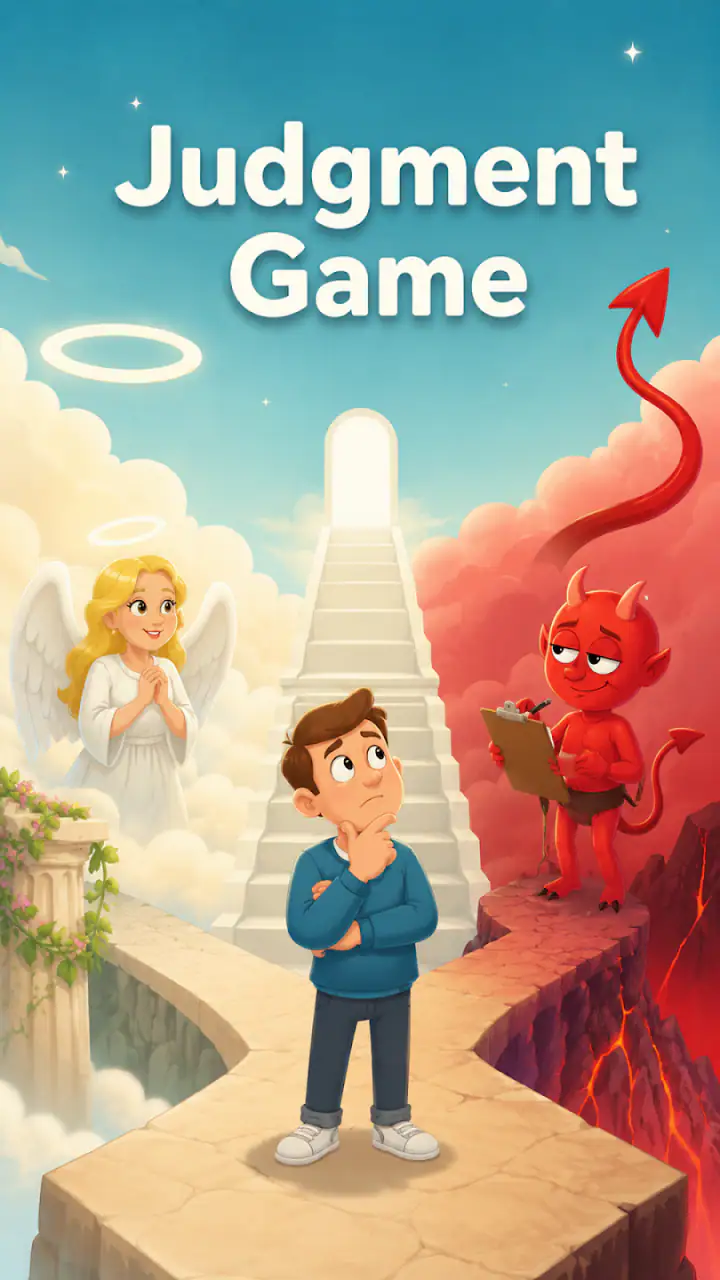
Another practical tip is to avoid rushing through several decisions merely because the game is casual. The short format can create the impression that every answer should be instant, but careful reading is usually more rewarding. I get more from the game when I treat each puzzle as a miniature case rather than as a reflex test.
Settings and session habits worth checking
Before settling into regular play, I would look through the available settings and device controls rather than assuming the default setup is ideal. In a game built around reading stories, comfortable text presentation and manageable sound are more important than they might be in a fast action title. If the audio is distracting in a public place, lowering it or muting the device makes the experience easier to fit into everyday routines.
I also prefer to play with notifications from other apps reduced whenever I am trying to follow a longer sequence of scenarios. Losing concentration halfway through a social puzzle is more frustrating here than missing a background animation, because the meaning of the decision depends on the wording. This is not a special feature of the game; it is simply a sensible way to protect the part of the experience that matters most.
The current version is 3.0.2 and the game requires Android 6.0 or later. That makes checking compatibility before installing worthwhile, especially on an older device. On a modern phone, the main question is less about demanding graphics and more about whether the screen is comfortable for reading. I would also keep enough free storage for ordinary app updates, even though this is not the kind of game I choose for visual spectacle.
Because it is free, the initial barrier is low, but in-app purchases range from $0.99 to $99.99 per item. I would treat that as a reason to review purchase controls before handing the phone to a child or using a shared device. The Everyone rating makes the game broadly approachable, but an age label does not replace sensible spending safeguards. For my own use, I would play the free portion first and decide whether the added convenience is actually useful before paying for anything.
That approach also answers an important practical question: is it genuinely free to try? Yes, the game is available at no upfront cost, so you can judge the core style without committing money immediately. However, free access and a completely purchase-free experience are not the same thing. Anyone who dislikes optional spending prompts should be prepared to manage them rather than treating the game as a fully paid-style product.
Building a repeatable routine
Experienced use is less about discovering a secret setting and more about creating a consistent rhythm. I like to begin with a short session, read every scenario fully, and stop when my decisions start becoming automatic. That keeps the game from turning into background tapping. If I am playing with friends, we take turns defending our choices, which adds a layer of replay value without pretending that every puzzle has a deep strategic system.
For solo play, a simple note of the decisions that surprised me can make later sessions more interesting. I do not record every answer; I focus on cases where my first instinct differed from the outcome or where another player gave a convincing alternative interpretation. This habit turns the game into a small exercise in recognizing assumptions, rather than a race to finish as many screens as possible.
I would not recommend trying to force a perfect strategy onto every situation. The stories are designed around judgment, and overanalyzing them can remove the casual appeal. The better workflow is to read attentively, make a reasoned choice, accept the result, and move forward. That balance keeps the game approachable while still giving careful players something to think about.
Faster patterns without losing the point
Once I became familiar with the format, I noticed a few habits that made sessions smoother. First, I stopped treating every visible detail as equally important. Some information establishes the context, while another phrase explains the actual conflict. Looking for the relationship between the people and the consequence of the decision is more useful than trying to remember every sentence word for word.
Second, I learned to separate “what happened” from “what should happen next.” A character may have made a mistake, but the fairest response is not always the harshest one. That distinction is especially helpful in puzzles that present an emotionally charged situation. It also prevents the game from becoming a simple exercise in rewarding the most likable person.
Third, I use a two-pass method when a scenario feels ambiguous. On the first pass, I identify the apparent conflict. On the second, I ask which option resolves the situation most consistently with the details. This is quicker than repeatedly switching between choices, and it gives me a clear reason for my decision even when the answer does not feel obvious.
These patterns are useful for players who want to move faster, but they should not be mistaken for a hidden scoring exploit. The game’s strength is interpretation, not optimization. If you rush solely to increase the number of completed puzzles, you may technically progress more quickly while getting less value from the stories.
The format also compares interestingly with ordinary trivia alternatives. A conventional quiz app is better when I want factual recall, categories, timed rounds, or a clear measure of knowledge. Judgment Game is better when I want a low-pressure activity that invites discussion. Compared with a word puzzle, it demands less vocabulary manipulation; compared with a story game, it offers shorter interactions and less commitment to a continuing narrative.
That comparison reveals a trade-off. Players looking for elaborate branching plots, character development, or a competitive leaderboard may find this experience too contained. On the other hand, someone who wants to play while commuting, share a scenario at dinner, or fill a few minutes without learning a complex ruleset may find the compact structure more convenient than a larger adventure game.
Where the quick format starts to show limits
The same design that makes the game accessible can also make it feel repetitive. Social dilemmas are memorable when the wording feels fresh, but familiar patterns become easier to recognize after several sessions. I would therefore use it as a pick-up-and-play title rather than as my only game. Alternating it with a factual quiz, word game, or longer narrative experience helps preserve its appeal.
Subjectivity is another limitation. I appreciate that the puzzles encourage discussion, but players who expect every answer to be indisputably correct may become frustrated. A judgment-based scenario can feel less satisfying when the reasoning behind an outcome does not match the player’s personal sense of fairness. That is not necessarily a flaw, but it changes the kind of challenge the game provides.
There is also a difference between replaying a puzzle to reconsider it and replaying it to discover a completely new game. Repetition can be useful for comparing choices, especially with friends, but it may not provide the same surprise as a new level. I would recommend it more strongly to casual players who value conversation and quick stories than to completionists who need extensive systems to master.
For children, the Everyone rating makes the game broadly suitable, yet I would still play alongside younger users occasionally. The situations involve social behavior and consequences, and discussing why a choice seems fair or unfair can be more valuable than leaving the interpretation entirely to the game. Adults should also remember that the purchase range deserves attention on shared devices, regardless of the content rating.
Who gets the most from it
I think the best audience is someone who enjoys short dilemmas, casual trivia, and talking through decisions. It is a good fit for a person who wants an approachable game after work, a parent looking for a simple shared activity, or a group of friends who like debating hypothetical situations. The low-pressure structure means nobody needs to be an expert before joining in.
It is less suitable for players who want fast reactions, deep resource management, competitive rankings, or a long campaign. It is also not my first choice when I want to learn reliable facts, because the focus is on social judgment rather than building a broad knowledge base. In those situations, a dedicated quiz app or a more substantial puzzle game would be a better match.
The audience size suggests that the concept has found a substantial casual following: the game has passed 500K installs, with a 4.2 average from around 5.8K ratings. Those figures do not replace personal taste, but they fit my impression that this is designed for broad, easy entry rather than a narrow community of specialists. Pipi Chick Studio has chosen a format that can be understood almost immediately, and that remains its clearest advantage.
It first appeared on November 30, 2021, so it is not a brand-new experiment. That gives the title a more established feel than a newly released curiosity, while the current version shows that it remains available in an updated form. I would still judge it by the quality of the individual situations and by how well its pacing suits me, rather than by its age alone.
My verdict after settling into the format
Judgment Game: Tricky Puzzles works because it turns familiar social questions into quick, playable decisions. I like that it asks me to read people and consequences instead of merely recalling information, and I appreciate how easily a session fits into a spare moment. The best way to enjoy it is to slow down just enough to understand each situation, then discuss surprising choices instead of chasing speed.
Its weaknesses are equally clear. The subjective answers will not satisfy everyone, repeated patterns can reduce the surprise, and players seeking a deep campaign or competitive structure should look elsewhere. The optional purchases also mean I would check device safeguards before letting a child play unsupervised. These are manageable concerns, but they matter when comparing it with more traditional trivia games.
My recommendation is simple: try it if you want a free, readable, conversation-friendly decision game that can be played in short sessions. Start with the basic workflow, check the sound and purchase settings, and use the two-pass reading habit when a puzzle feels manipulative or unclear. The real strength is not finding a magic shortcut; it is making a quick choice thoughtfully and seeing how another person interprets the same story.
With an Everyone rating, support for Android 6.0 and later, and a free entry point, it is easy to test without much commitment. I would keep it installed as a casual change of pace rather than a replacement for every other trivia or puzzle title. For the right player, that modest role is exactly what makes it useful: a small game for spare minutes that can occasionally lead to a surprisingly lively argument.
FAQs for Judgment Game: Tricky Puzzles
What is Judgment Game: Tricky Puzzles?
Judgment Game: Tricky Puzzles is a casual puzzle game built around short decision-making challenges. Each level presents a situation, a question, or a visual clue and asks you to identify the correct judgment. The puzzles often use misleading wording, hidden details, and unexpected logic, so the obvious answer is not always the right one. It is designed for quick, entertaining sessions rather than a long narrative adventure.
How do you play Judgment Game: Tricky Puzzles?
Gameplay is generally based on examining the screen carefully and selecting the answer or action that best solves each scenario. Some puzzles require ordinary reasoning, while others depend on spotting small details, interpreting the wording differently, or thinking beyond the choices shown. If you make a mistake, the game usually lets you retry, making experimentation part of the experience. Progress comes from solving levels one by one.
Is Judgment Game: Tricky Puzzles suitable for children?
The game may be suitable for older children and families because its main focus is simple puzzle solving, observation, and logic. However, parents should review the store rating and the individual content before allowing younger children to play. Some judgment-based scenarios can include humor, social situations, or themes that may not appeal to every age group. Advertising and in-app purchase settings should also be checked.
Does Judgment Game: Tricky Puzzles require an internet connection?
The basic puzzle experience may work during periods without a constant connection, but availability can depend on the version installed and the device being used. An internet connection may still be required for advertisements, downloading additional content, restoring purchases, or receiving updates. If you plan to play offline, it is best to test the game after installation and confirm which features remain accessible without mobile data or Wi-Fi.
Is Judgment Game: Tricky Puzzles free to download?
Judgment Game: Tricky Puzzles is typically offered as a free download, allowing players to try its core levels without paying upfront. Like many free mobile puzzle games, it may include advertisements, optional hints, or in-app purchases. These extras can affect the playing experience, especially when you need help with a difficult level. Check the official Google Play or App Store listing for current pricing and purchase details.
Pros
- Creative courtroom puzzles that reward careful reading and observation.
- Short levels make it easy to play during quick breaks.
- Simple controls are accessible for most players.
- Unexpected twists keep the cases entertaining and engaging.
- Works well for casual players who enjoy logic and deduction.
Cons
- Some solutions rely on trial and error rather than clear reasoning.
- Difficulty can feel inconsistent between consecutive cases.
- Repeated puzzle patterns may reduce the challenge over time.
- Ads may interrupt the experience
- depending on the device and version.
- Limited gameplay variety may make longer sessions feel repetitive.


